
GE Wave Bioreactor 2050EH Platform Base

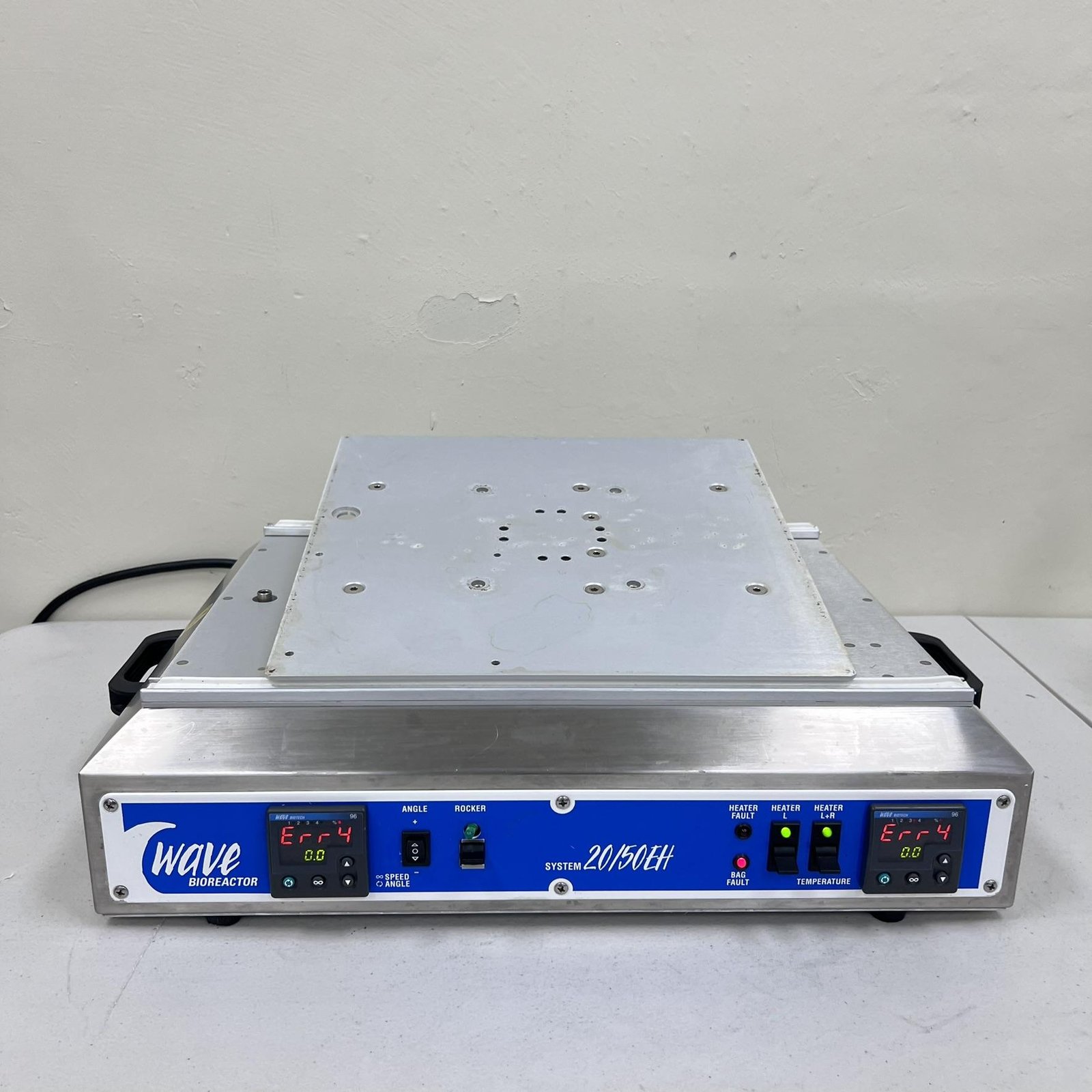
The GE Wave Bioreactor System 2050EH Platform Base (Part No. BASE2050EH) is a modular, benchtop wave-induced agitation system. Specifically, it is designed for single-use cell culture bioprocessing. Developed by Wave Biotech and GE Healthcare Life Sciences, this platform delivers non-invasive, low-shear mixing. Furthermore, it provides efficient gas transfer for mammalian, insect, and plant cell lines in research and biomanufacturing environments.
Key Features & Technical Specifications
- Wave-Induced Agitation: The motor-driven rocking platform generates wave motion across single-use bioreactor bags. Consequently, this continuous motion delivers efficient fluid mixing and oxygen transfer without internal impellers.
- Working Capacity: The 20/50 platform base accommodates interchangeable tray assemblies. Specifically, it supports working culture volumes from 500 mL up to 25 liters (20L tray) or 50 liters (50L tray) using single-use Cellbag bioreactors.
- Rocking Speed & Angle Control: Operators can easily adjust rocking rates from 2 to 40 cycles per minute (RPM). In addition, tilt angles adjust from 2° to 12°, which allows fine-tuning for sensitive cell lines.
- Integrated Temperature Management: The base unit includes a heating pad and a digital temperature controller. Therefore, it maintains process temperatures from 10°C above ambient up to 50°C with precision.
- Electrical & Structural Specs: The unit operates on auto-switching 100–120 V / 220–240 V AC power with a 630 VA draw. Additionally, its rugged stainless-steel benchtop frame fits cleanly into cleanroom or standard laboratory setups.
GE Wave Bioreactor System 2050EH Compatibility & Applications
The GE Wave Bioreactor System 2050EH serves as a core base unit that integrates with modular process accessories. For instance, it connects seamlessly with gas mixers ($CO_2 / O_2$), external feed pumps, and load cell modules for real-time mass monitoring.
By using pre-sterilized single-use bags, the system eliminates traditional cleaning and sterilization steps. As a result, it significantly reduces turnaround times and cross-contamination risks during scale-up, seed train expansion, and protein expression workflows. Overall, this reliable setup ensures maximum operational flexibility for modern bioprocessing laboratories.